CHF to USD: Swiss Franc to Dollar Live Rate & What Drives It
Live CHF to USD rate — what drives the Swiss franc as a safe-haven currency, SNB policy, and how to convert at the real rate.
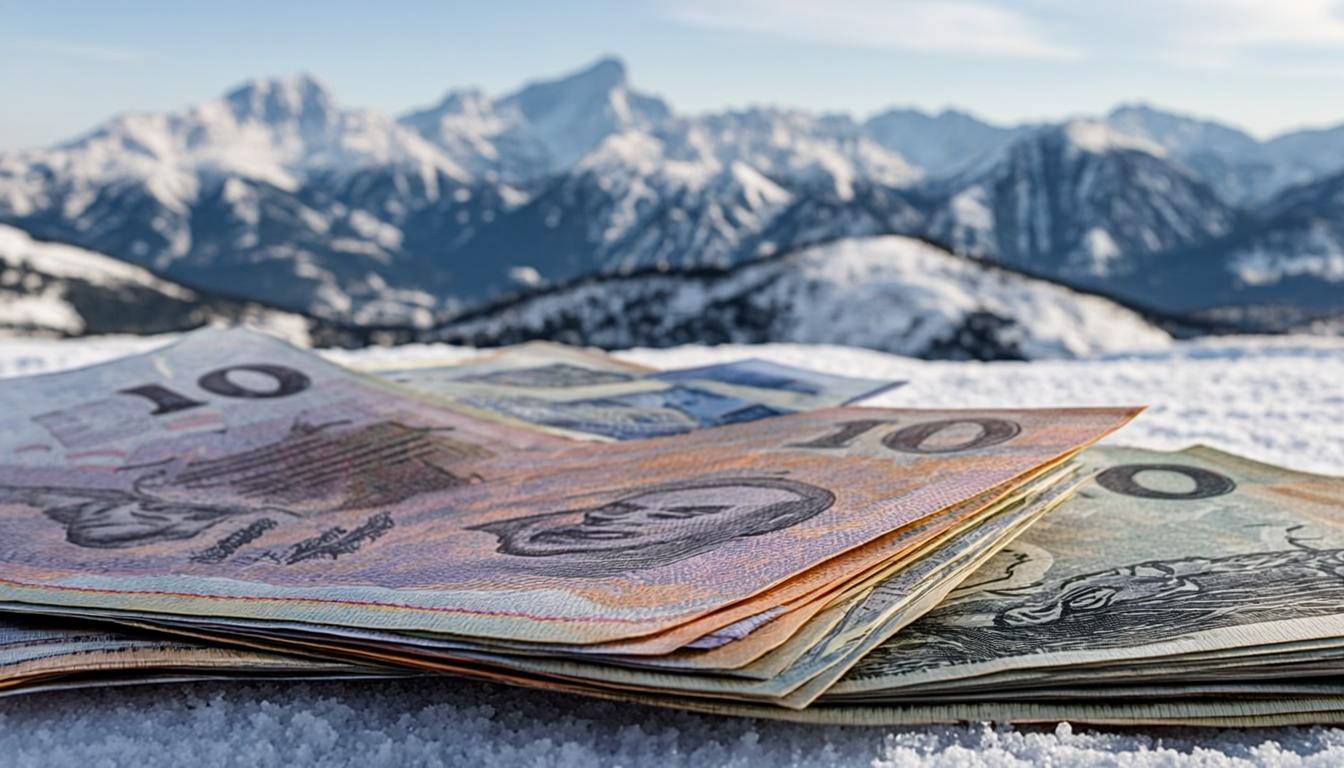
CHF to USD: Swiss Franc to Dollar Live Rate & What Drives It
If you're a Swiss software engineer working in New York, a watchmaker exporting from La Chaux-de-Fonds to Miami, or simply a tourist planning a ski trip from Zurich to Aspen, the CHF to USD rate is the number that quietly decides whether your month feels expensive or cheap. As of October 14, 2026, the Swiss franc is trading at roughly 0.88 CHF to 1 USD — meaning one Swiss franc buys about $1.135. The franc has stayed stubbornly strong against the dollar for over a year, even as the Federal Reserve cut rates and the Swiss National Bank (SNB) slashed its own policy rate to 0.25% in September. In our tracking on the live CHF to USD pair page, the pair has spent most of 2026 in a tight 0.86–0.91 range — a quiet kind of strength that hides some of the most interesting monetary policy in the world.
Based on our analysis, CHF/USD is one of the most misunderstood currency pairs in retail search. People Google "chf usd", "chf in usd", "chf to usd", "chf/usd", and even "chf to euro" or "chf eur" hoping to find one simple number — but the right answer depends on what you're actually trying to do. This guide covers the live rate today, why the Swiss franc is so persistently strong, the SNB's unusual monetary policy, the January 2015 unpegging that shocked the market, how CHF relates to EUR, and a 4-step checklist to make sure you convert CHF to USD at the real mid-market rate. This is informational analysis, not financial advice — but it should help you avoid the worst of the bank spreads.
Today's CHF to USD Rate (October 14, 2026)
Here's the snapshot of the chf to usd rate based on the live mid-market data we display on our CHF/USD page:
| Metric | Value (Oct 14, 2026) | Notes |
|---|---|---|
| Mid-market CHF/USD | 0.880 | 1 CHF = 1.1356 USD |
| USD/CHF (inverse) | 1.1356 | How most FX desks quote it |
| Interbank high (intraday) | 0.884 | Franc stronger, dollar weaker |
| Interbank low (intraday) | 0.877 | Touched during European morning |
| SNB policy rate | 0.25% | Cut from 0.50% in September 2026 |
| 1-year range | 0.838 – 0.912 | Very tight by CHF standards |
That intraday range of about 0.7 cents might look tiny, but on a CHF 100,000 conversion (a typical Swiss expat wiring savings to a US brokerage) it's the difference between $113,560 and $114,520 — roughly $960 in pure FX timing. Banks in Switzerland typically quote retail customers a spread of 1.0 to 2.5 centimes on CHF/USD, which is one of the wider retail spreads in the G10 currency complex. To see the actual live mid-market rate without that padding, you can use our free converter — it pulls the real interbank rate in near real-time.
CHF to USD vs Last Week, Month, Year
To know whether today's chf usd rate is good, bad, or ordinary, you need context. Here's where CHF/USD stands against recent history, based on the data we track on our CHF/USD dashboard:
| Timeframe | CHF/USD Rate | Change vs Today | What It Means |
|---|---|---|---|
| Today (Oct 14, 2026) | 0.880 | — | Current mid-market |
| Last week (Oct 7) | 0.886 | −0.006 (−0.68%) | Franc weakened as dollar firmed |
| Last month (Sep 14) | 0.895 | −0.015 (−1.68%) | Pre-SNB cut franc strength |
| 3 months ago (Jul 14) | 0.872 | +0.008 (+0.92%) | Franco dip on EU growth scare |
| Last year (Oct 14, 2025) | 0.864 | +0.016 (+1.85%) | Modest franc gain year-over-year |
| 5 years ago (Oct 2021) | 0.925 | −0.045 (−4.86%) | Dollar was much stronger then |
The pattern is clear: the franc has been gently strengthening against the dollar over the last year, despite the SNB cutting rates twice. This is unusual. In a textbook world, the lower-yielding currency weakens when rate differentials widen. The fact that CHF keeps firming tells you the safe-haven bid and structural current account surplus are doing more work than interest rate differentials — a theme we'll come back to.
Why Is the Swiss Franc So Strong? Four Structural Reasons
If you search "chf usd" expecting to find a franc trading at parity with the dollar, you'll be disappointed every time. The franc has traded stronger than the dollar — i.e., one franc buys more than one dollar — almost continuously since 2010. Here's why.
1. Switzerland's massive current account surplus. Switzerland runs a current account surplus of around 7–9% of GDP, one of the largest in the developed world. That's a structural inflow of foreign currency that has to be converted back into francs — pharmaceuticals (Novartis, Roche), watches, machinery, and financial services all bring in euros and dollars that get repatriated. That perpetual demand for CHF keeps a floor under the franc regardless of what the SNB does with rates.
2. The safe-haven bid. When global markets get nervous — geopolitical risk, banking stress, recession fears — capital flows into Switzerland. The franc is one of only three currencies (alongside the dollar and yen) that consistently strengthens during risk-off episodes. In 2026, with renewed Middle East tensions and a slow Chinese recovery, that safe-haven bid has been a quiet tailwind all year.
3. SNB intervention, then capitulation. The SNB spent years fighting franc strength. From 2011 to January 2015, it pegged the franc to the euro at 1.20 — printing francs to buy euros in staggering quantities, then reinvesting those euros in foreign equities and bonds. When the SNB abandoned that peg on January 15, 2015, the franc appreciated nearly 30% against the euro in a single day. That episode remains one of the largest single-day moves in any G10 currency ever, and it permanently reset expectations about what the SNB was willing to do (or not do) to defend a level.
4. Low inflation = preserved purchasing power. Swiss inflation has averaged about 0.8% in 2026, well below the US (around 2.6%) and the eurozone (around 2.1%). Real yield differentials favor the franc even when nominal rates don't, which is part of why CHF has firmed even as the SNB cuts faster than the Fed.
The SNB and Why Its Policy Is Unusual
The Swiss National Bank is not your typical central bank. Unlike the Federal Reserve, the European Central Bank, or the Bank of England, the SNB actively intervenes in the FX market — sometimes verbally, sometimes physically — and it holds an enormous portfolio of foreign equities (Apple, Microsoft, and other US mega-caps are all on the SNB balance sheet as a byproduct of past intervention). When the SNB cut its policy rate to 0.25% in September 2026, it explicitly mentioned "the continued overvaluation of the Swiss franc" and signaled willingness to intervene if needed.
The market reaction was telling: CHF dipped for about 48 hours, then resumed its gentle climb. That's because rate cuts alone don't fix the structural forces (current account surplus, safe-haven flows, low inflation) keeping the franc strong. If you want to follow SNB policy meetings in real time, our rate alerts tool lets you set a notification for any CHF/USD threshold — useful for catching the next intervention surprise.
CHF to EUR: The Franc's Other Big Pair
Many readers searching for "chf to euro", "chf eur", "chf to eur", or "chf eur cours" land here because the franc is fundamentally a euro-centric currency. Roughly 75% of Swiss merchandise exports go to the EU, and most Swiss household financial decisions are benchmarked against the euro. The CHF/EUR cross rate today is around 0.96, meaning 1 franc buys about 1.04 euros — the franc has traded above parity with the euro ever since the 2015 unpegging.
If you're looking for a dedicated CHF/EUR view, you can use our live converter with EUR as the target currency, or check the broader approach in our currency conversion guide for tips on cross-rate conversions.
How to Convert CHF to USD at the Real Rate
Here's a 4-step checklist we recommend before any CHF/USD conversion. It works whether you're converting CHF 100 or CHF 1,000,000, and it's adapted from the methodology in our how to convert at the real rate guide:
- Get the mid-market rate first. Open our live converter and note the exact CHF to USD rate. Today it's 0.880 (or 1.1356 USD per CHF, expressed the other way). This is your benchmark.
- Get a quote from your bank or transfer provider. Swiss banks like UBS, Credit Suisse (now merged into UBS), and Cantonal banks typically quote retail customers a rate 1.0–2.5 centimes worse than mid-market. If they quote you 0.895 when mid is 0.880, that's a 1.5-centime spread — about CHF 1,500 in hidden fees on a CHF 100,000 transfer.
- Factor in the fixed fee. Many Swiss banks charge CHF 10–25 for outgoing international transfers in addition to the spread. A provider offering 0.885 with no fee beats a bank offering 0.888 with a CHF 20 fee on transfers up to about CHF 30,000. Always compute the total cost.
- Consider timing. CHF/USD has stayed in a tight 0.86–0.91 range for most of 2026, which means timing matters less than picking the right provider. Set a free rate alert at your target level — if the franc spikes to 0.86 on a risk-off day, you'll catch it.
Following this 4-step process typically saves 1–2.5% on every CHF to USD conversion — which, on a CHF 200,000 emigration transfer, is CHF 2,000–5,000 back in your pocket.
Common CHF to USD Conversion Amounts
| Amount (CHF) | Amount (USD) at 0.880 | Typical Use Case |
|---|---|---|
| CHF 100 | $113.56 | Tourist spending, ski weekend |
| CHF 1,000 | $1,135.60 | Online purchases, freelance invoices |
| CHF 10,000 | $11,356 | Tuition deposit, professional fees |
| CHF 100,000 | $113,560 | Relocation, brokerage funding |
| CHF 1,000,000 | $1,135,600 | Property purchase, business deal |
What to Watch Through End of 2026
Looking at the rest of 2026, three things could move the exchange rate chf usd:
- Fed vs SNB policy gap. If the Fed pauses its cutting cycle while the SNB continues easing, the rate differential could finally push CHF toward 0.91 — but only if the safe-haven bid cools. Our base case is CHF/USD stays in a 0.86–0.90 range.
- EU recession risk. A deeper eurozone slowdown would paradoxically strengthen CHF as capital flees to safety — a textbook safe-haven flow. Watch German manufacturing PMI.
- SNB FX intervention. The SNB hasn't intervened in spot markets since 2022, but Governor Schlegel has hinted it remains "an available tool." A surprise intervention could trigger a sharp 1–2% franc weakening within hours.
Our base case: CHF/USD trades in a 0.86–0.90 range through end of 2026, with a slight downward bias as the rate differential finally catches up. But a risk-off shock could push the franc back toward 0.84. Set a free rate alert at your target level so you don't have to refresh the screen.
FAQ
What is the CHF to USD rate today?
As of October 14, 2026, the CHF to USD rate is 0.880 — meaning 1 Swiss franc buys approximately 1.1356 US dollars. This is the live mid-market rate we display on our CHF to USD pair page. Swiss banks and money transfer providers typically add a 1.0–2.5 centime spread on top, so the rate you actually receive when converting will usually be slightly worse than this mid-market benchmark.
Is the Swiss franc stronger than the US dollar?
Yes. One Swiss franc currently buys about $1.14, so the franc is "stronger" than the dollar in nominal terms. This has been true almost continuously since 2010. The franc's strength comes from Switzerland's massive current account surplus, persistent safe-haven demand, low inflation, and the structural composition of the Swiss economy. For more on what "strength" actually means in FX, see our currency conversion guide.
Why did the Swiss franc jump 30% in January 2015?
On January 15, 2015, the Swiss National Bank unexpectedly abandoned its 1.20 CHF/EUR peg, which it had defended since September 2011 by printing francs and buying euros. When the peg was removed, the franc appreciated nearly 30% against the euro intraday — one of the largest single-day moves in G10 FX history. The SNB took this step because the cost of defending the peg (in terms of balance sheet expansion) had become unsustainable, and ECB quantitative easing was about to push the euro lower.
Will CHF to USD go up or down?
Based on our analysis, CHF/USD is likely to stay in a 0.86–0.90 range through end of 2026, with a slight downward bias if the SNB cuts further and the Fed pauses. However, a risk-off shock could push the franc back toward 0.84. This is analysis, not financial advice — set a free rate alert at your target level to get notified of major moves.
Where can I convert CHF to USD at the real rate?
You can check the live mid-market CHF to USD rate on our CHF to USD page or use the live converter for instant conversions at the real rate, without bank margins. Both tools pull from the same data feed used by financial institutions, updated in near real-time throughout the trading day.